Imagine a world where art isn't just the work of human hands, but also the product of artificial intelligence. Welcome to the world of AI Art Generators, where tech meets creativity to create stunning art. Lately, these AI tools have really made waves in the art scene, changing how we think about and make art. Some AI-generated pieces have even fetched over $400,000 at auctions. This tech uses neural networks and machine learning to turn simple ideas into amazing visuals. In this article, we'll look at the tech behind these tools, check out some popular AI art generators, and talk about their uses and ethical questions. Whether you're an artist looking for new ideas or just curious about where art is headed, this guide will shed light on AI-generated art. Let's dive into how AI is changing art and what it means for artists and fans!
Summary: This article describes the technologies, workings, and applications of AI art generators, addressing ethical considerations and copyright issues while exploring future trends and offering creative inspiration and prompt engineering tips. It also reviews popular AI art tools and answers frequently asked questions.
Understanding AI Art Generators
What Sets AI Art Apart from Traditional Digital Art
AI art is crafted or enhanced using AI tools, marking a departure from traditional digital art where artists manually create their work using software like Adobe Photoshop or Corel Painter.
So, what's the big difference?
AI art leverages machine learning algorithms to sift through massive datasets and generate unique pieces. While traditional digital art relies on the artist's hands-on creativity, AI art becomes a collaborative effort between the artist and the machine. This partnership often leads to surprising and novel results. AI isn't limited to just images; it can create videos and even music, pushing boundaries beyond what manual creation typically achieves.
How AI Art Generators Turn Text into Visuals
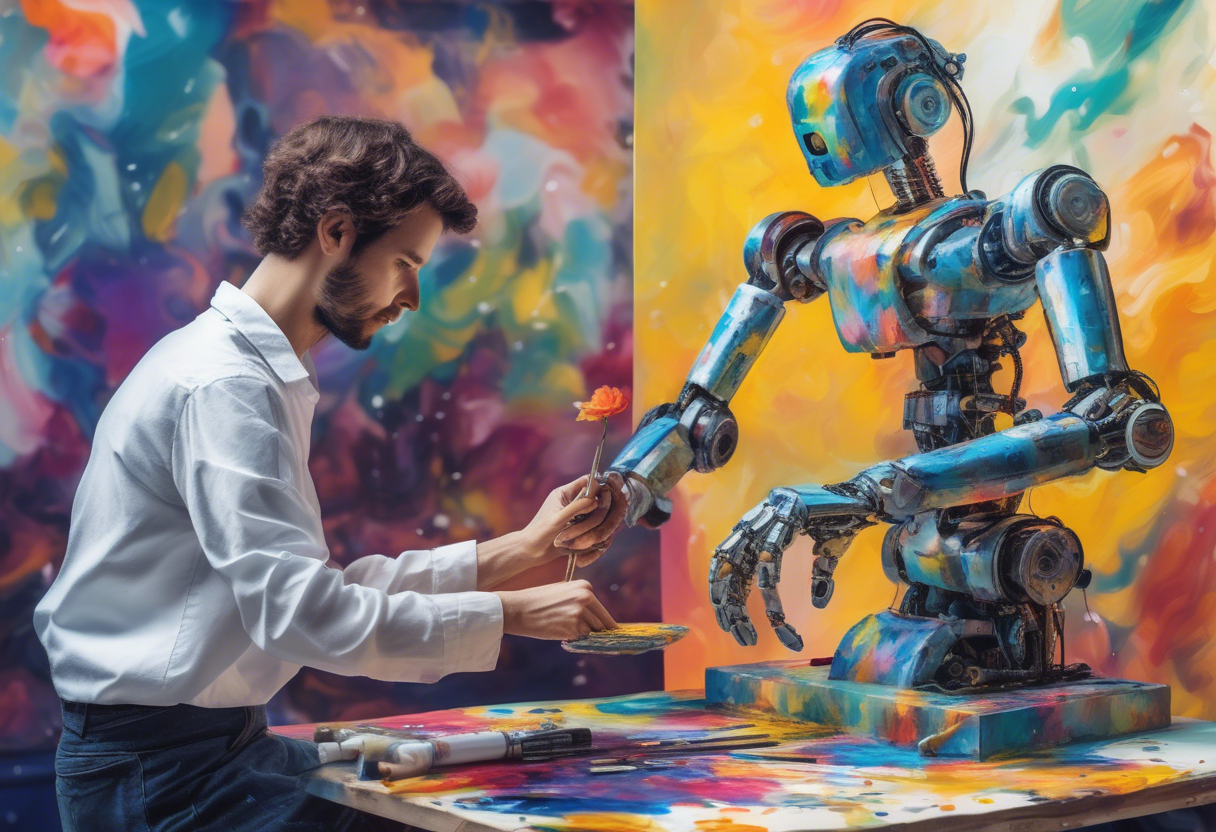
AI art generators transform text prompts into visuals using machine learning algorithms. They're trained on vast image datasets to understand and mimic artistic styles.
How does it work?
Users typically input some parameters or a starting image, and the AI takes it from there, crafting artwork that aligns with the given criteria. Tools like Midjourney, DALL-E, and Stable Diffusion allow users to experiment with styles, mix images, and explore creativity beyond traditional methods. It’s a blend of human ideas and machine innovation, offering a fresh perspective on art creation.

Machine Learning's Impact on AI Art Generators
Machine learning is pivotal in AI art generation, utilizing algorithms like GANs (Generative Adversarial Networks) and diffusion models. These algorithms enable AI to learn from extensive datasets and create new images in distinctive ways.
For instance, GANs involve two networks: one generates images, and the other evaluates them. Through feedback loops, the generator improves at producing realistic and stylized art. This learning process helps AI art generators evolve, crafting artwork that rivals human creativity in complexity and originality.
In essence, machine learning transforms AI art from a mere tool into an active partner in the creative process, constantly improving with feedback and new data.
Key Technologies Powering AI Art Generators
Understanding GANs: The Heart of AI Art Generators
Generative adversarial networks, or GANs, are major players in AI art creation. They consist of two neural networks:
The Generator: This component's job is to create data that resembles the training data, such as images. It starts with random noise and gradually learns to produce outputs that closely mimic real data.
The Discriminator: Acting as a judge, the discriminator assesses what is real and what is generated. It provides feedback to the generator, which helps improve its outputs over time.
This iterative process continues until the generator produces data that is indistinguishable from the real thing. This is how AI art generators can create incredibly realistic and creative art pieces. GANs have been used to mimic famous artists' styles, generate lifelike human faces, and enhance image quality with techniques like super-resolution and colorization. A well-known example is StyleGAN, which generates human faces that look just like real photos.
CNNs and NST: Techniques Enhancing AI Art Generators
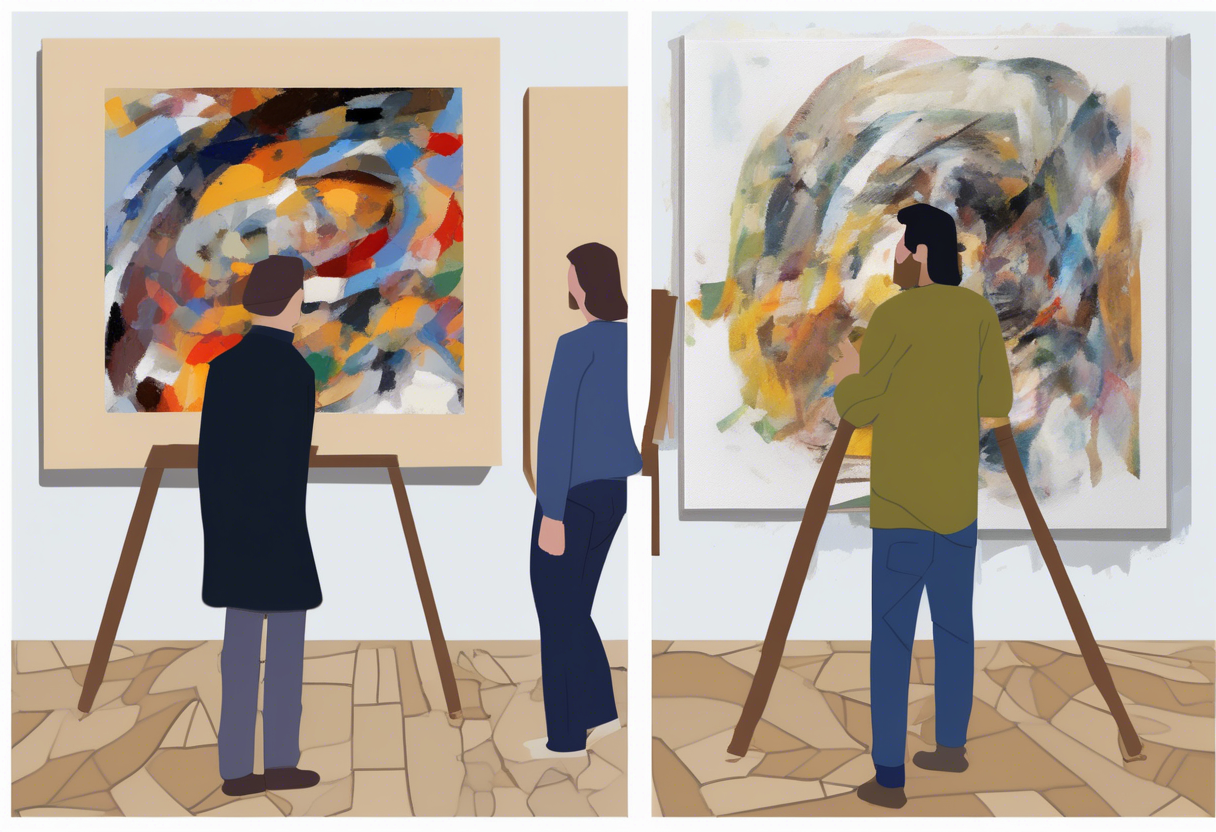
Convolutional neural networks, or CNNs, are crucial in AI art, especially for image processing. They're excellent at identifying patterns in images, making them ideal for tasks like object detection and image classification. This capability is utilized in neural style transfer (NST), a technique that combines the content of one image with the style of another.
NST leverages CNNs to separate and blend content and style, resulting in art that merges the structure of a photo with the flair of a famous painting. Apps like DeepArt and Prisma have popularized this approach, enabling users to transform photos into stylized art with just a few clicks. By mastering NST and CNN techniques, artists and designers can harness generative AI to create innovative visual art that blends different styles.
Diffusion Models: Emerging Tools in AI Art Generation
Diffusion models represent a new and exciting development in AI art. They work by gradually transforming a simple noise distribution into a complex data distribution through multiple diffusion steps. It's akin to reverse heat diffusion, where randomness is reduced to reveal intricate patterns and structures.
These models excel at creating high-quality images with fine details and textures. They provide a fresh approach to image synthesis, complementing methods like GANs and CNNs, and are being incorporated into AI art tools to enhance the diversity and quality of generated art. Notable examples include Stable Diffusion, DALL·E 3, and Midjourney, which start with random noise and refine it to match text prompts, resulting in high-quality, realistic, and stylized images.
NLP's Impact on AI Art Generators: Deciphering User Prompts
Natural language processing, or NLP, is pivotal in AI art generators as it enables them to understand and respond to user prompts. With NLP, AI can comprehend the nuances of human language, allowing users to articulate the artwork they wish to create. This involves parsing complex sentences, understanding context, and extracting key elements that guide art creation.
For instance, if a user types "a serene landscape at sunset," the NLP component breaks down the description and converts it into parameters that direct the AI's creative process. This connection between language and image-making allows users to interact creatively with AI, making art creation more accessible. AI art generators use NLP to grasp and interpret user text prompts by training on vast numbers of image-text pairs, helping them identify key elements, styles, and composition needs from complex prompts.
How AI Art Generators Work
Transforming Text Prompts into Images with AI Art Generators
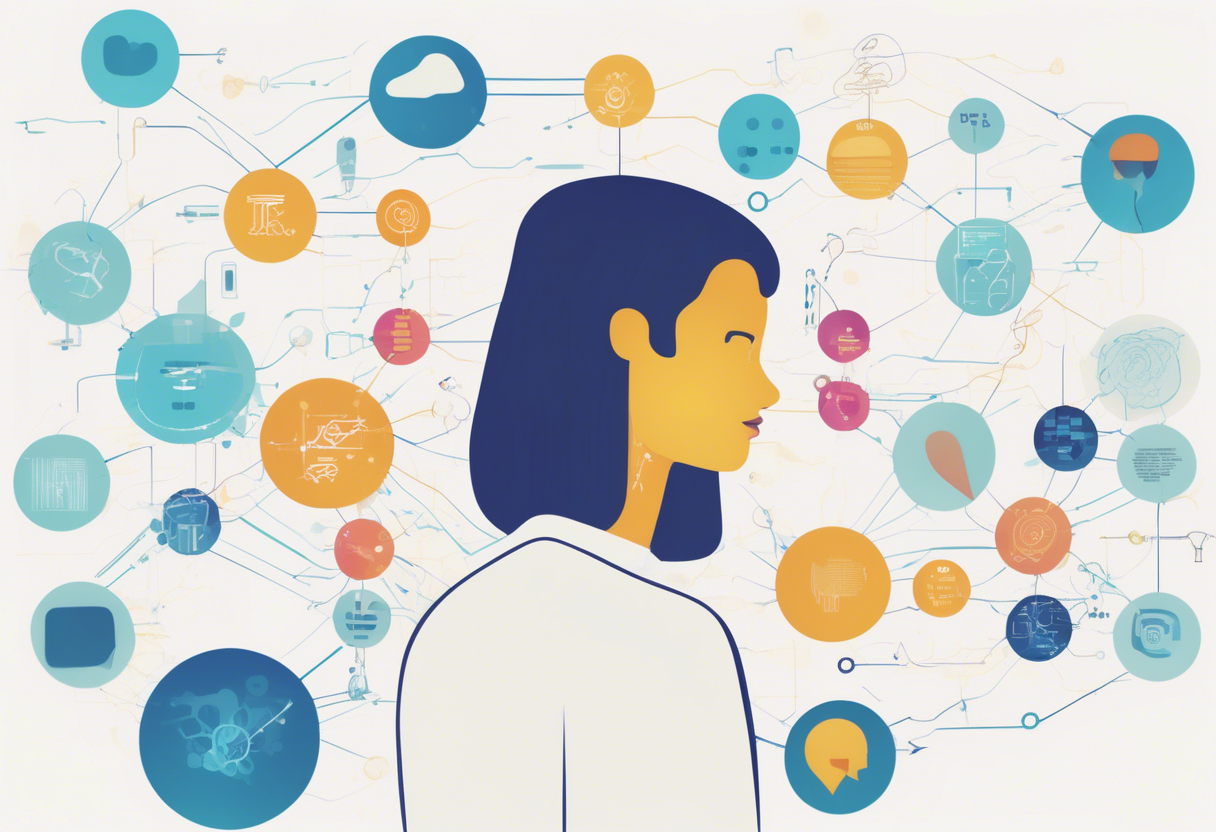
AI art generators transform words into pictures through a process known as text-to-image synthesis. This involves a blend of natural language processing (NLP) and computer vision techniques.
Here's how it works:
- Understanding the Text: The AI first reads the text prompt using NLP to grasp its meaning and context.
- Visualizing the Concept: It then translates that understanding into a visual idea.
- Image Creation: A model, such as a Generative Adversarial Network (GAN) or a diffusion model, takes this visual idea and generates an image based on the text.
For example, if you request "a Renaissance-style dog," the AI taps into its knowledge of Renaissance art styles to craft an image that aligns with the prompt. It continuously refines the image to ensure it meets the details of the prompt and maintains visual coherence.
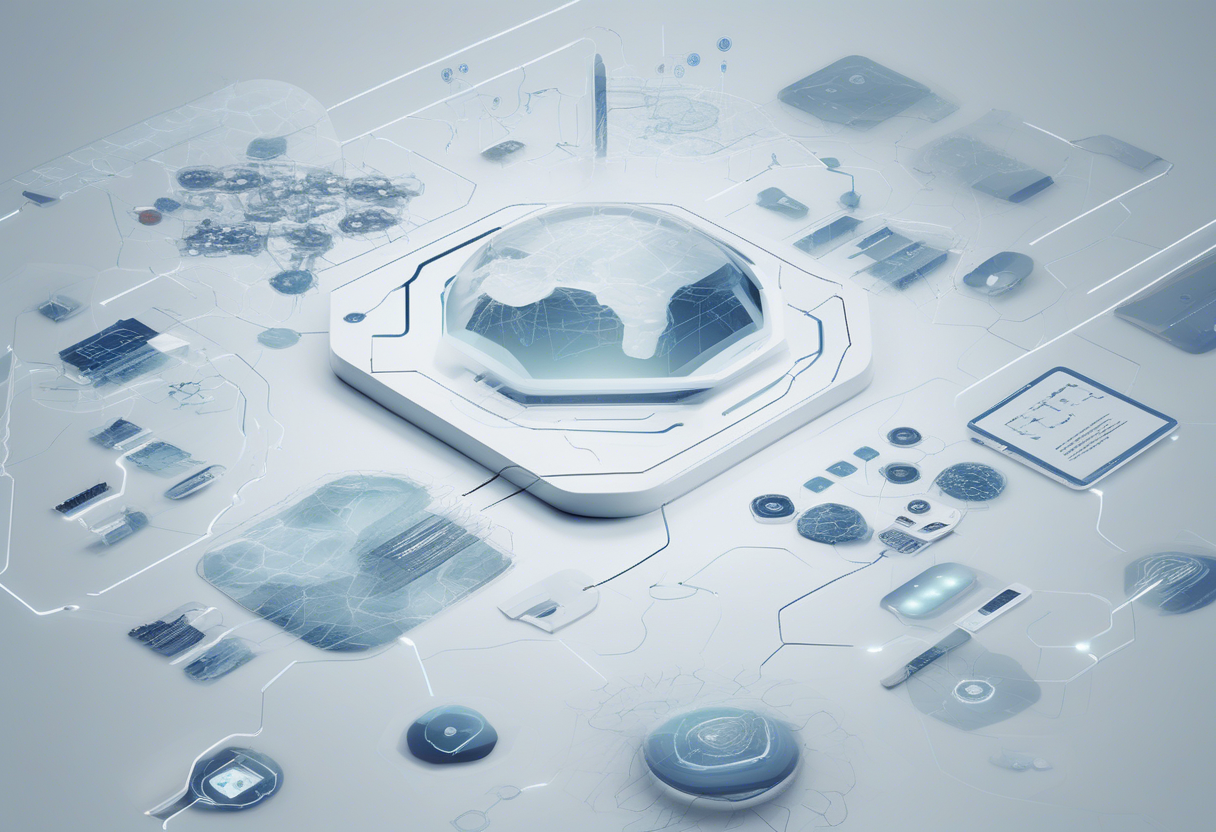
Learning and Improvement in AI Art Generators
AI models enhance their art-making abilities through a cycle of learning and refinement. Here's the process:
- Training on Datasets: They train on extensive datasets, adjusting their parameters to minimize errors.
- Feedback Loop: Each image creation involves comparing the output against the intended result. This feedback loop enables fine-tuning.
- Incremental Improvement: In a GAN, for instance, one part generates images while another evaluates them, gradually improving quality. Meanwhile, a diffusion model refines noise into a coherent image, guided by the user's request.
This iterative process of trying, checking, and adjusting continues until the model becomes proficient. Over time, it recognizes patterns and connections between text and images, improving its ability to translate complex prompts into impressive visuals.
Impact of Big Data and Deep Learning on AI Art Generators
The creation of detailed and lifelike images by AI art generators relies heavily on big datasets and deep learning models.
Key elements include:
- Rich Datasets: These datasets contain millions of images, often paired with text descriptions, providing a vast learning resource.
- Deep Learning Models: Technologies like convolutional neural networks (CNNs) and transformers process this data, learning to identify features and understand the relationship between text and images.
With access to such extensive data, AI models can work across various styles and subjects, producing unique art pieces. This training enables the AI to generate images that not only appear aesthetically pleasing but also correspond accurately to the prompts. Deep learning empowers AI to replicate artistic styles and create diverse, realistic images, propelling digital art forward.
Top AI Art Generators and Creative Tools
Leading AI Art Generators: DALL·E, GPT-4o, and Innovative Tools
AI art generators are transforming the way we create art. One standout is DALL·E 3, developed by OpenAI. It’s renowned for its ability to convert text into highly detailed images, allowing for easy image customization. This feature makes it a favorite among digital artists.
Another notable tool is Midjourney, which is celebrated for producing stunning and artistic visuals. Artists appreciate its unique styles and high-quality output.
While GPT-4o is primarily a language model, it has been adapted to assist with art by offering creative prompts and stories that inspire visual work. Additionally, Runway ML deserves mention for its extensive suite of AI tools designed for image creation. It empowers artists and designers to experiment with different styles and effects.

AI Art Generator Pricing and Features Comparison
AI art generators vary in pricing and features. To access all features of DALL·E 3, a $20/month ChatGPT Plus subscription is required. It’s user-friendly, catering to both beginners and seasoned artists.
Midjourney offers a starting price of $8/month. It’s straightforward and enables the creation of top-notch images effortlessly.
Runway ML provides flexible pricing options, including pay-as-you-go and subscriptions. It seamlessly integrates into creative workflows, making it popular among users who enjoy its versatility and the opportunity to experiment with AI models.
Deepbrain AI Studios: Comprehensive AI Art Solutions
Deepbrain AI is gaining attention with its innovative tools, particularly AI Studios. This platform allows users to craft and customize AI-generated content, spanning both video and image creation. It serves as an all-in-one tool for content creators, emphasizing user-friendliness. You don’t need to be a tech expert to produce professional-grade content here. Deepbrain AI continuously adds new features, aiming to become a leading player in AI art generation.

Applications and Use Cases of AI Art Generators
AI Art Generators in Home Decor and Branding
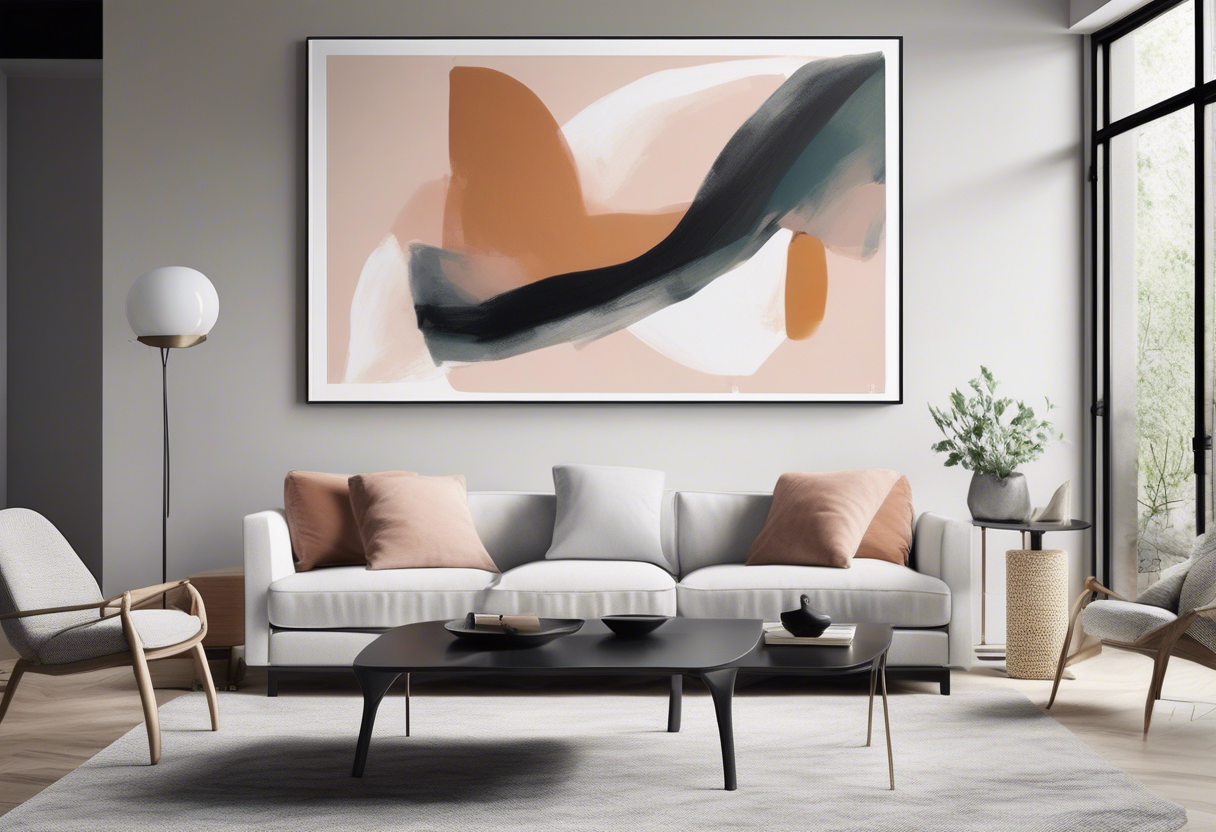
AI art is transforming our approach to home decor and branding. In the realm of home decor, it provides endless design options to suit any style. Platforms like Artbreeder enable users to mix images and create unique art pieces. These can be printed as wall decor, offering a personal touch without the high cost of custom pieces.
When it comes to branding, AI art is a game-changer for businesses seeking a distinct look. Tools like DeepArt and RunwayML assist in crafting eye-catching logos and marketing materials. These tools help capture a brand's essence, ensuring visuals remain consistent and fresh. This is especially beneficial for startups, allowing them to quickly develop logos, packaging, and other brand visuals that resonate with their audience.
Creative Industries Leveraging AI Art Generators
AI art is making waves across various creative fields:
Fashion: Designers are leveraging AI to create unique fabric patterns and textures, leading to innovative clothing lines. This fusion of technology and fashion is pushing design boundaries.
Music: AI art is used to create striking album covers and music videos. Artists utilize tools like DALL-E for surreal visuals that complement their music, enhancing the listener's experience.
Gaming: The gaming industry is embracing AI art for designing detailed game worlds and characters, offering players immersive experiences. AI-generated art aids in concept art and character design, enriching stories and reducing production costs.
Advantages and Challenges of AI Art Generators
AI art technology comes with a host of benefits:
- Cost-effective and offers endless creativity.
- Makes art accessible to everyone, enabling quick, high-quality designs without needing a professional artist.
- Automates tasks, boosts creativity, and reduces production time and costs.
- Provides a wide range of styles and customization options.
However, there are also challenges:
- Concerns about losing the authenticity and emotional depth found in traditional art.
- Critics argue that AI art may lack the human touch.
- Ethical issues regarding the ownership of AI-generated art.
- AI can produce inconsistent results, often requiring multiple attempts to achieve the desired outcome.
While AI art presents exciting possibilities, it also introduces challenges that need to be addressed as the technology continues to evolve.
Ethical Considerations and Copyright Issues in AI Art Generators
AI Art Ownership and Copyright Challenges
AI art stirs up quite a debate about who owns what. Copyright laws usually protect original works made by humans. But with AI art, things get tricky since a machine learning model often creates it, not a person.
In many places, AI-generated art can't get copyright protection because there's not enough human involvement. So, who gets to claim it?
Some say the developers should, since they build the algorithms and gather the data. Others think the user who gives the prompts and picks the final piece should be the owner.
This gray area has sparked legal battles, with lawsuits popping up against AI companies for copyright issues. Artists claim their work is used to train AI models without asking or paying them.
This situation shows we need new laws to handle these modern creative methods and ensure everyone gets fair treatment and credit.
Ethical Implications of AI Art Generators
AI-generated art also brings up some ethical questions. One worry is that AI might copy existing styles, which could lead to appropriation and make human artists' work seem less valuable.
Artists fear AI could flood the market with similar-looking pieces, making it tough for original creators to stand out.
Plus, using datasets with copyrighted images without permission raises ethical flags. This can also spread biases in the data, resulting in art that reinforces stereotypes.
There's also the risk of AI-generated images being used for deepfakes or misleading visuals, which can threaten privacy and social trust.
Ethical issues also involve how transparent and accountable AI models are, as users often don't know how these systems work or where the training data comes from.
We need openness and responsibility in using AI art tools to tackle these ethical concerns. Getting this right is key to making sure AI art benefits the creative world.
Future Trends and Innovations in AI Art
Emerging AI Art Generator Technologies and Innovations
AI art is on the brink of some exciting changes. One major development to watch is the rise of multimodal AI models. These models blend text, images, video, and audio to create art that's richer and more interactive. Imagine seamlessly switching between different formats while maintaining a coherent narrative. This is the immersive experience we're talking about.
AI art tools are evolving into workflow assistants, integrating into familiar platforms like Adobe Photoshop and Substance Painter. This integration means easier procedural generation, texture creation, and automated layout and color tasks. It's akin to having a creative partner handling the heavy lifting. Additionally, advancements in 3D modeling allow even 2D artists to effortlessly transition into creating 3D models and animations.
Hyper-personalization is another frontier. AI will tailor art to individual tastes, whether for ads, education, or entertainment. With edge computing and 5G/6G networks, real-time AI art creation and collaboration will become seamless, offering instant feedback and iteration.
Evolution of AI Art Generators Beyond Current Capabilities
AI art is poised to transcend current capabilities by gaining a deeper understanding of human emotions and cultural contexts. Future AI might interpret emotional cues to create art that resonates on a profound level, pushing beyond mere imitation to innovation and challenging our perceptions of art.

We may witness AI art transitioning from static images to dynamic, interactive experiences. Envision real-time animations, virtual worlds, and augmented reality. Artists could collaborate with AI, receiving suggestions, refining drafts, and even critiques in real-time, blurring the line between human and machine creation.
AI will also tackle more complex tasks, such as composing music, creating photorealistic animations, and designing virtual worlds for movies, games, and ads. As AI art becomes indistinguishable from human-made art, questions of authenticity and originality will arise. Legal and ethical frameworks, like the EU AI Act, will be crucial in addressing issues of copyright, consent, and transparency.
Ultimately, AI may evolve from being a mere tool to a creative force in its own right, producing art that stands alongside human masterpieces.
Creative Inspiration and AI Art Generator Prompt Engineering Tips
Crafting Effective Prompts for Enhanced AI Art Generation
Want to create eye-catching AI art? It all starts with crafting the right prompts. Here’s how you can enhance your AI-generated artwork:
Be Clear and Specific: Use straightforward language to avoid confusion and help the AI get it right. Instead of just saying "dog," try "a playful golden retriever in a sunflower field." More details give the AI a better picture to work from.
Consider Style and Mood: Think about the style and mood you want to create. Words like "surreal," "impressionistic," or "vintage" can steer the AI toward a specific artistic style. Adding feelings like "serene" or "mysterious" can set the tone for the artwork. Including specifics about the setting, lighting, colors, and mood can really help guide the AI.
- Embrace Creativity: Don’t be afraid to mix things up with unusual ideas or abstract concepts. AI loves creativity and can surprise you with amazing results when given the freedom to explore. Try tweaking your prompts based on what you get initially to get closer to what you want. Playing with different prompt styles and lengths can also help you find what works best for your vision.
Examples of Successful AI Art Generator Prompts and Styles
Looking for some prompt inspiration? Here are a few examples to get you started:
Futuristic Cityscape: "A futuristic cityscape at dusk, with neon lights reflecting on rain-soaked streets, in a cyberpunk style." This sets a scene and hints at a specific artistic genre.
Whimsical Forest Scene: "A whimsical forest scene with oversized mushrooms and glowing fireflies, painted in a dreamy watercolor style." This one leans toward fantasy while suggesting a medium.
Renaissance Portrait: "A Renaissance portrait of a noblewoman, adorned with intricate lace and pearls, gazing pensively out a window." It nudges the AI to mimic classical techniques.
Consistent Styles: If you like consistency, styles like low poly or isometric can help keep things uniform across different pieces.

These examples show how being clear and creative with your prompts can lead to exploring all sorts of artistic paths.
FAQs
How Do AI Art Generators Use Machine Learning?
AI art generators utilize machine learning models like generative adversarial networks (GANs) and diffusion models to transform data into art. These systems are built on neural networks trained with vast amounts of images and their descriptions.
Here's how it works:
- Pattern Recognition: The AI learns to identify patterns and styles across various art forms.
- Input Processing: When creating art, the AI processes an input—such as a text prompt or a starting image.
- Model Application: It runs this input through its model to generate something new.
- Artistic Mimicry: The model uses its learned techniques to mimic artistic elements like brush strokes or color schemes, resulting in a unique piece.
This involves several layers of data refinement, where the AI continually tweaks the output to match the desired style or concept.
Differences Between GANs and Diffusion Models in AI Art
Generative Adversarial Networks (GANs) and diffusion models are pivotal in AI art creation.
Here's a breakdown:
GANs:
- Consist of two neural networks: one generates images, while the other evaluates them against real images, providing feedback for improvement.
- This iterative process results in high-quality, realistic images.
- Known for being fast and efficient.
Diffusion Models:
- Begin with random noise and refine the image by incrementally removing noise, guided by learned data probabilities.
- Renowned for producing diverse and detailed images.
- Require more computing power compared to GANs.
Can AI Art Generators Mimic Any Style or Genre?
AI art generators are impressively versatile, capable of crafting images in a wide array of styles and genres. They learn from diverse datasets, enabling them to replicate anything from classical paintings to modern digital art.
Consider the following:
- User Guidance: Users can influence the style through prompts or example images.
- Versatility: Their adaptability makes them suitable for various creative projects.
- Training Data Dependency: The quality of style replication depends heavily on the training data. Some generators excel in specific art forms, delivering more polished results.
While these generators can handle many styles, they may struggle with niche or complex genres if the training data doesn't adequately cover them. For more insights, explore this resource.